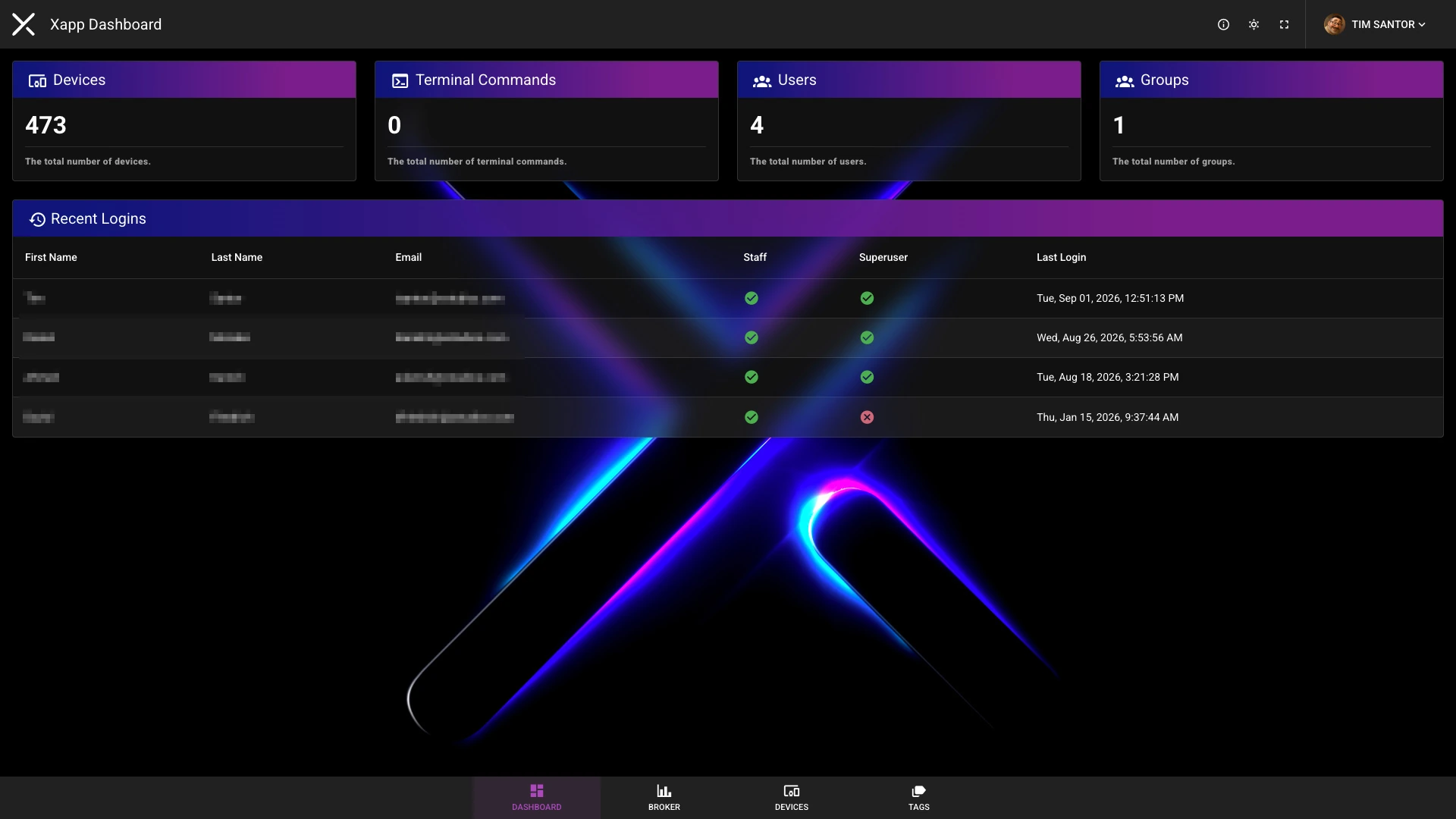
See your whole installation at a glance
Every device, its health, and its recent activity on one screen — filtered by client, group, tag, or status. Your team gets the same picture, simplified, so a status check doesn't mean opening a ticket.
Device monitoring & support by X Studios
Xapp is how X Studios monitors, configures, and supports the devices behind your installation — every Raspberry Pi, Linux, Windows, and macOS machine, in real time, from one dashboard.
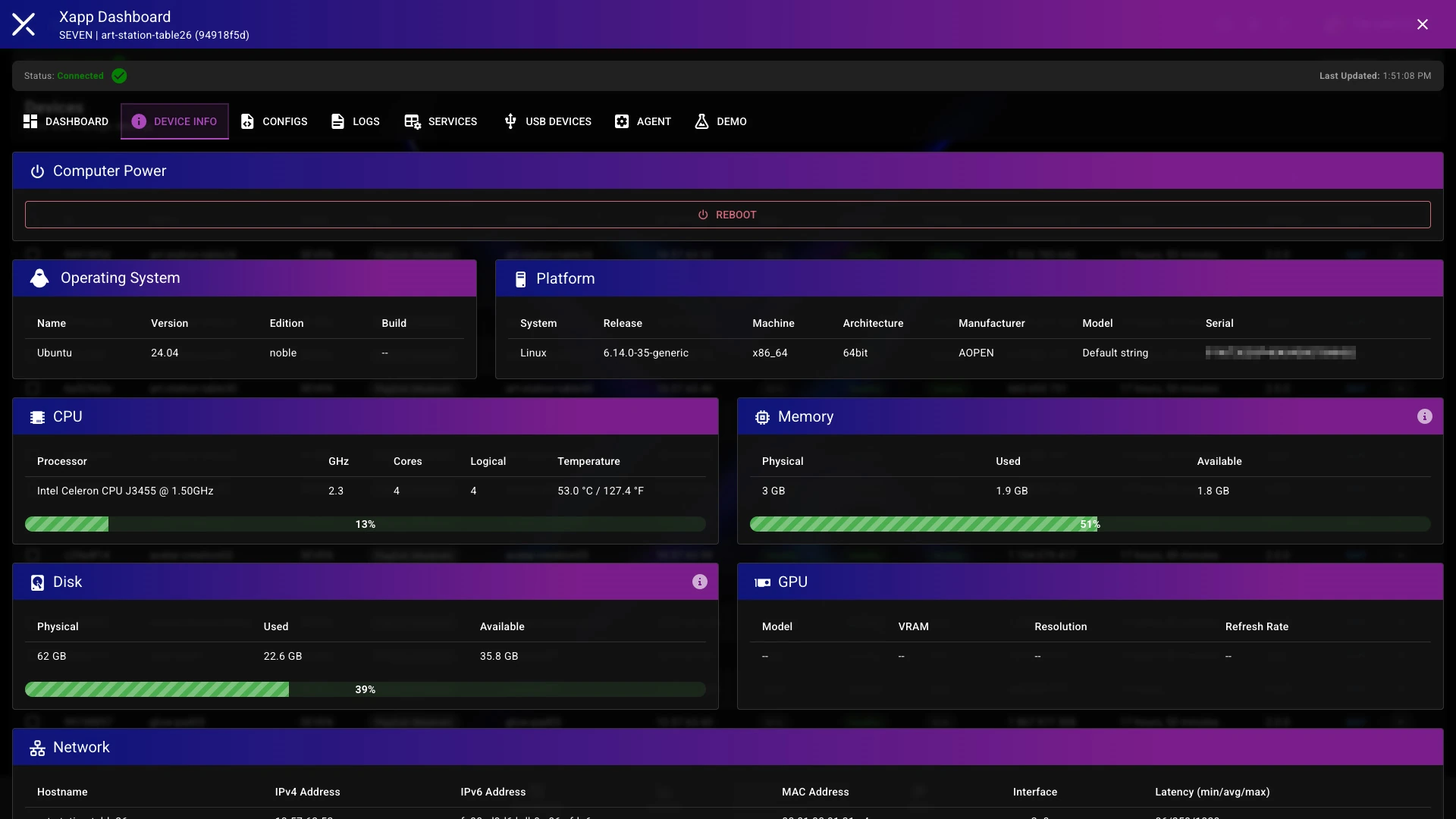
Live hardware telemetry
years designing, building, installing, and supporting interactive experiences — Xapp is what that experience is built on.
Your hardware lives in museums, family entertainment centers, innovation centers, and out on the show floor. Xapp brings every one of them onto one dashboard.
A frozen kiosk or an unplugged card reader shouldn't wait for a visitor to report it. Xapp flags it the moment it happens — often before anyone on-site notices.
You run the experience, not the servers. We monitor, diagnose, and support you remotely — you get easy access to check status, reboot, or restart apps/services on your own.
The platform
Xapp pairs a cloud dashboard with a lightweight monitor on every device. Together they give a live picture of the whole installation — and the controls to fix most things remotely, before they reach the floor.
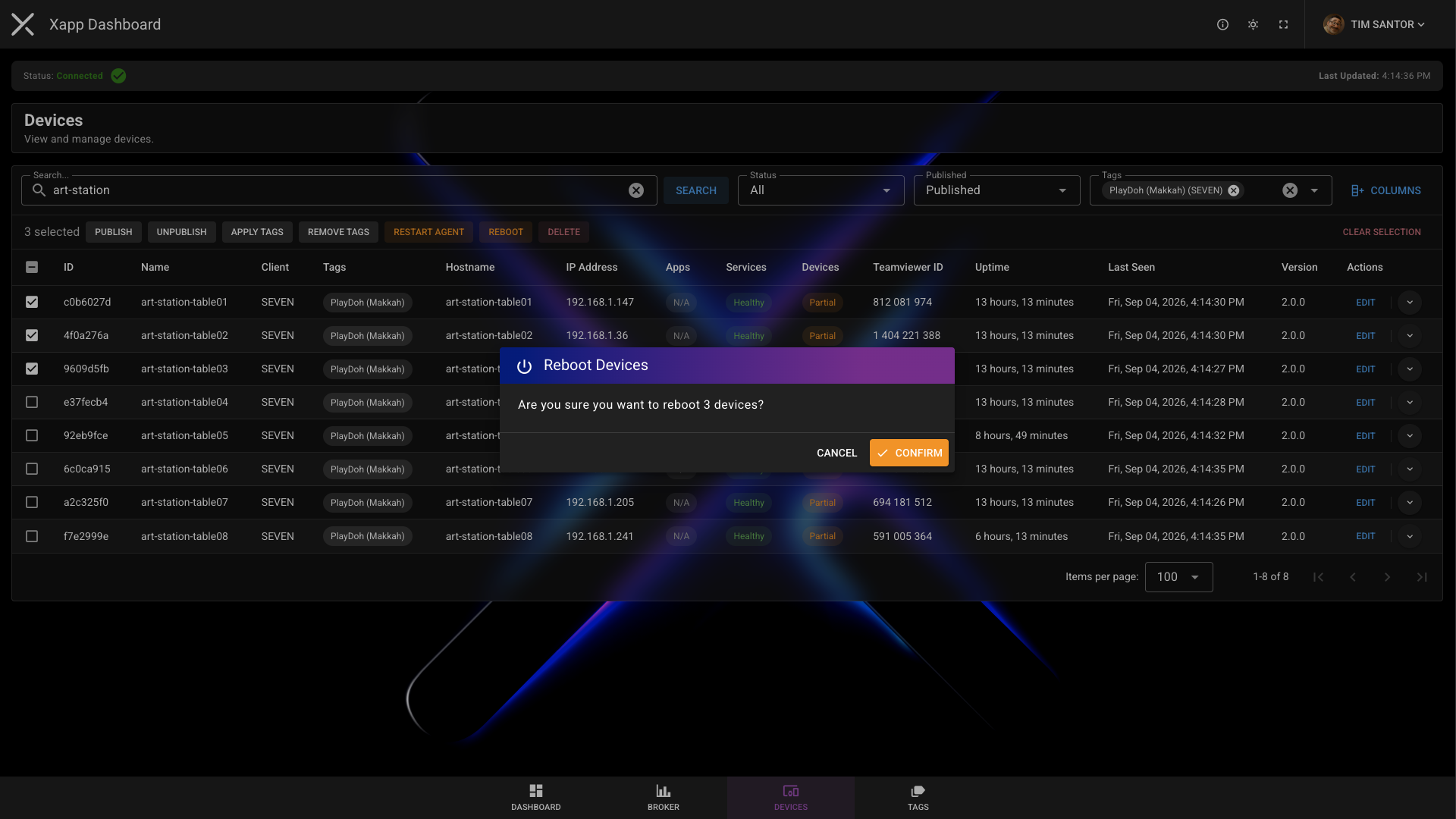
Every device, its health, and its recent activity on one screen — filtered by client, group, tag, or status. Your team gets the same picture, simplified, so a status check doesn't mean opening a ticket.
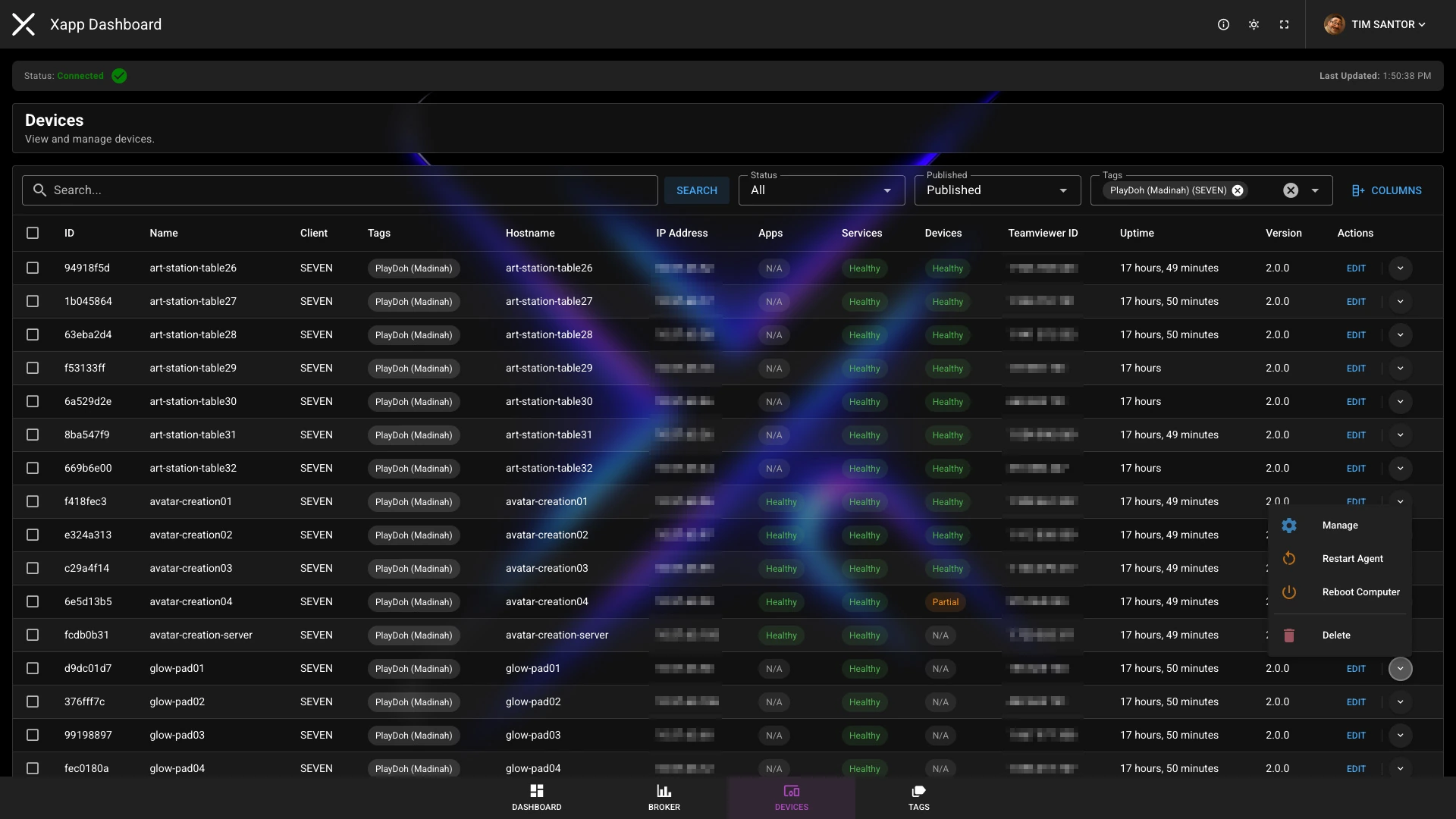
Restart, reboot, or open a session on any device — or a whole tag or group at once — straight from the dashboard, no truck roll required. Your team can do the same from their own simplified view.
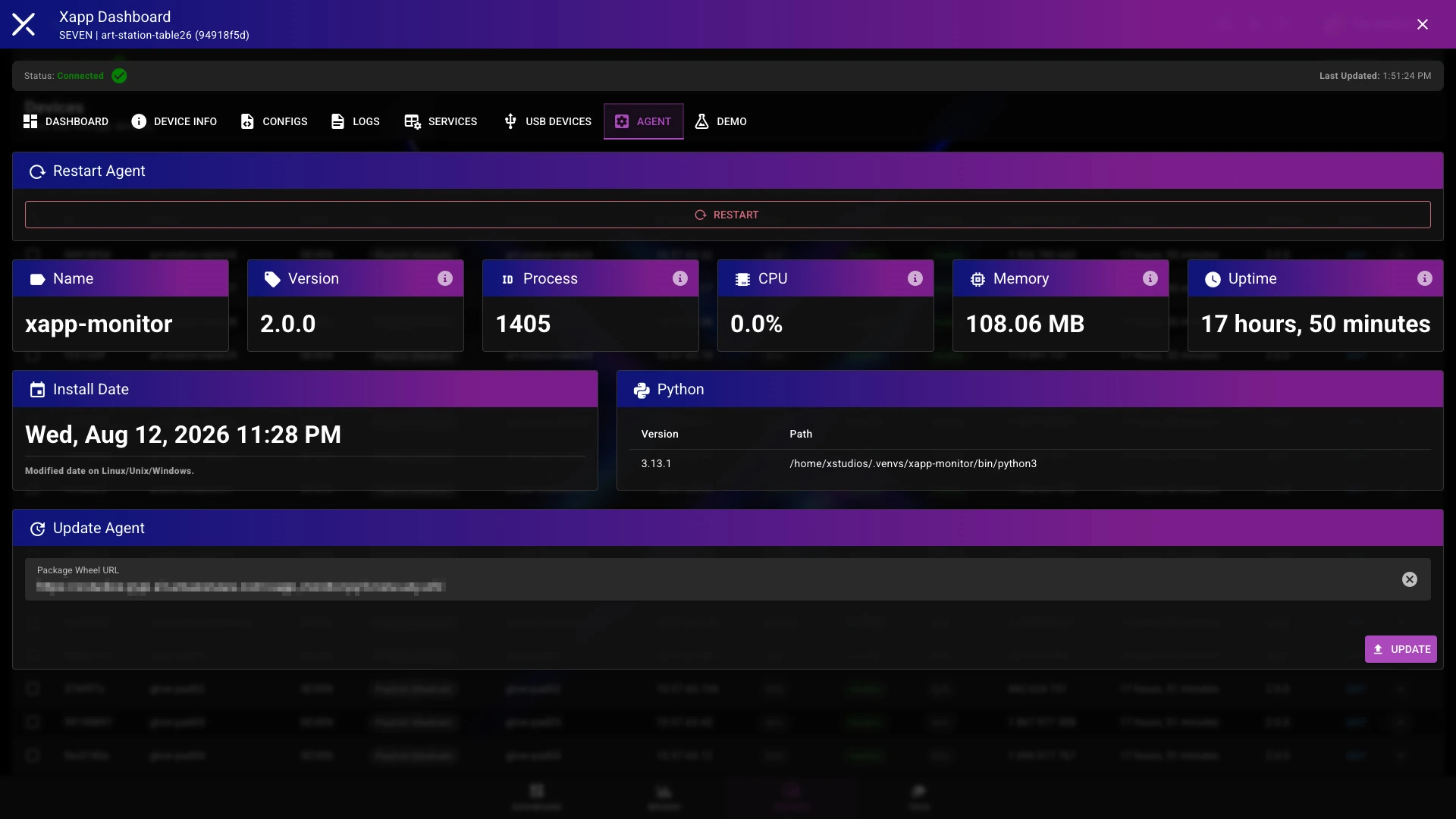
CPU, memory, disk, and network health are reported live from every machine, so a problem shows up on the dashboard long before a guest notices.
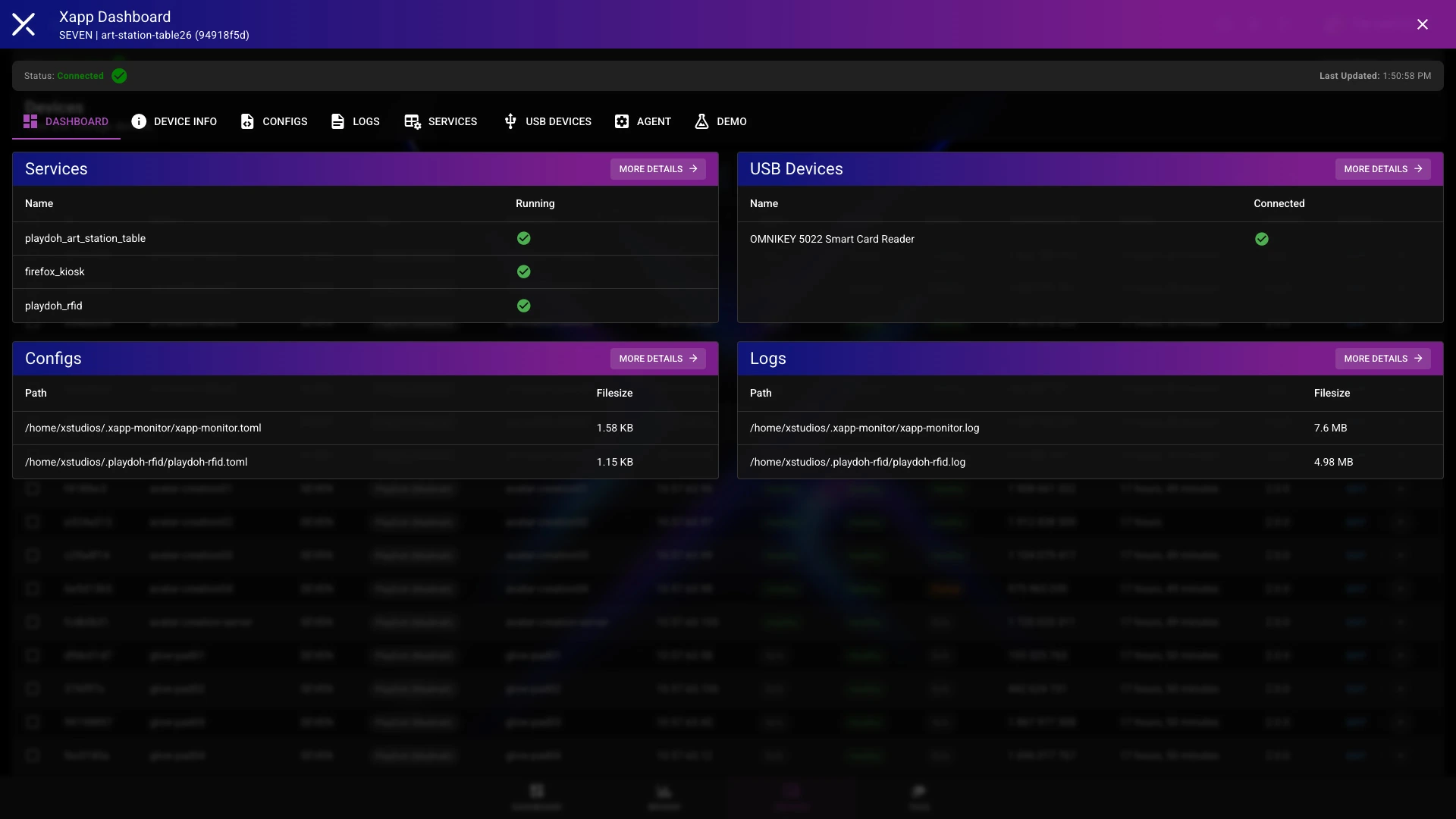
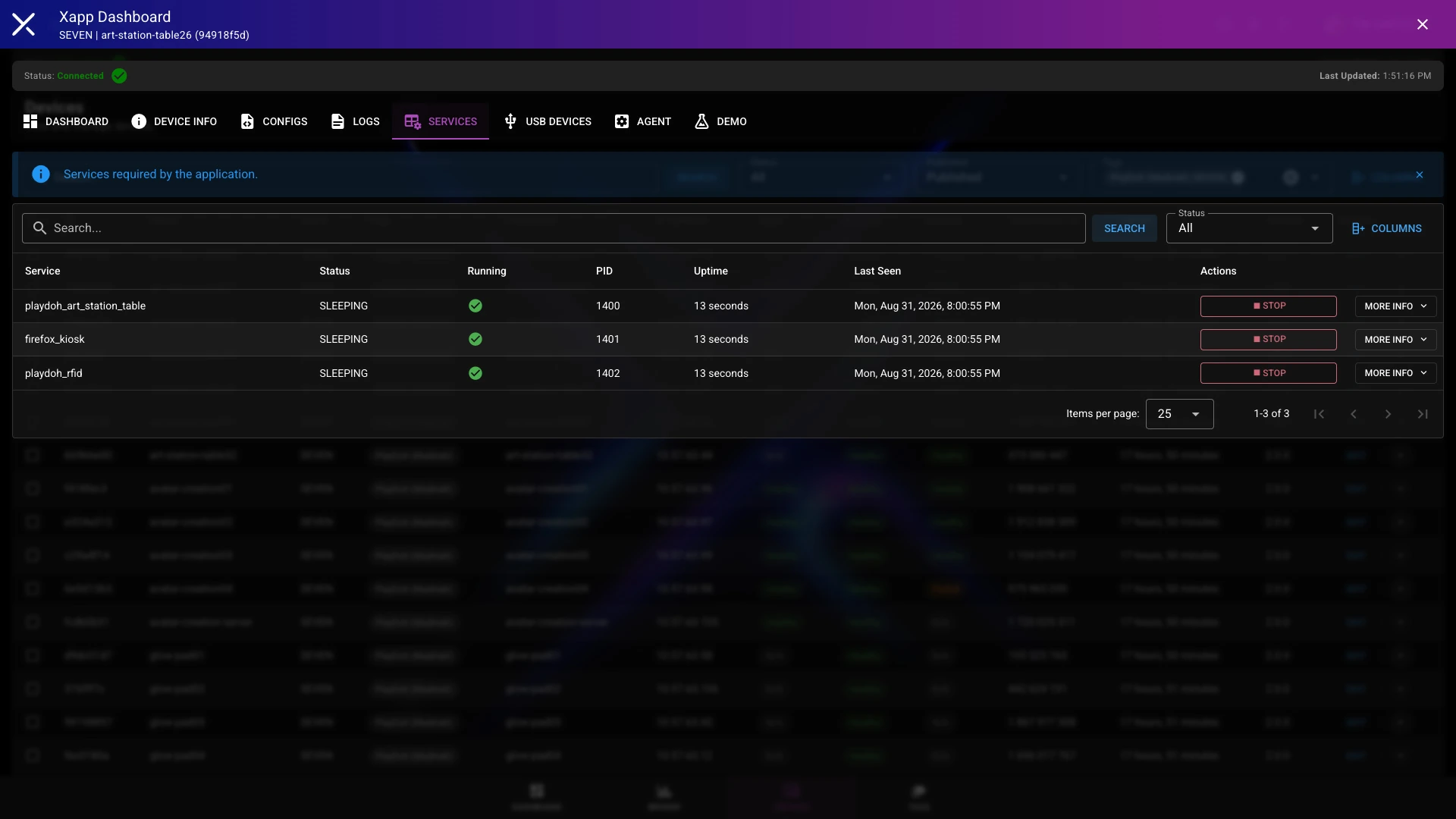
The background services and kiosk apps each device depends on are watched continuously — see at a glance what's healthy and what needs attention.
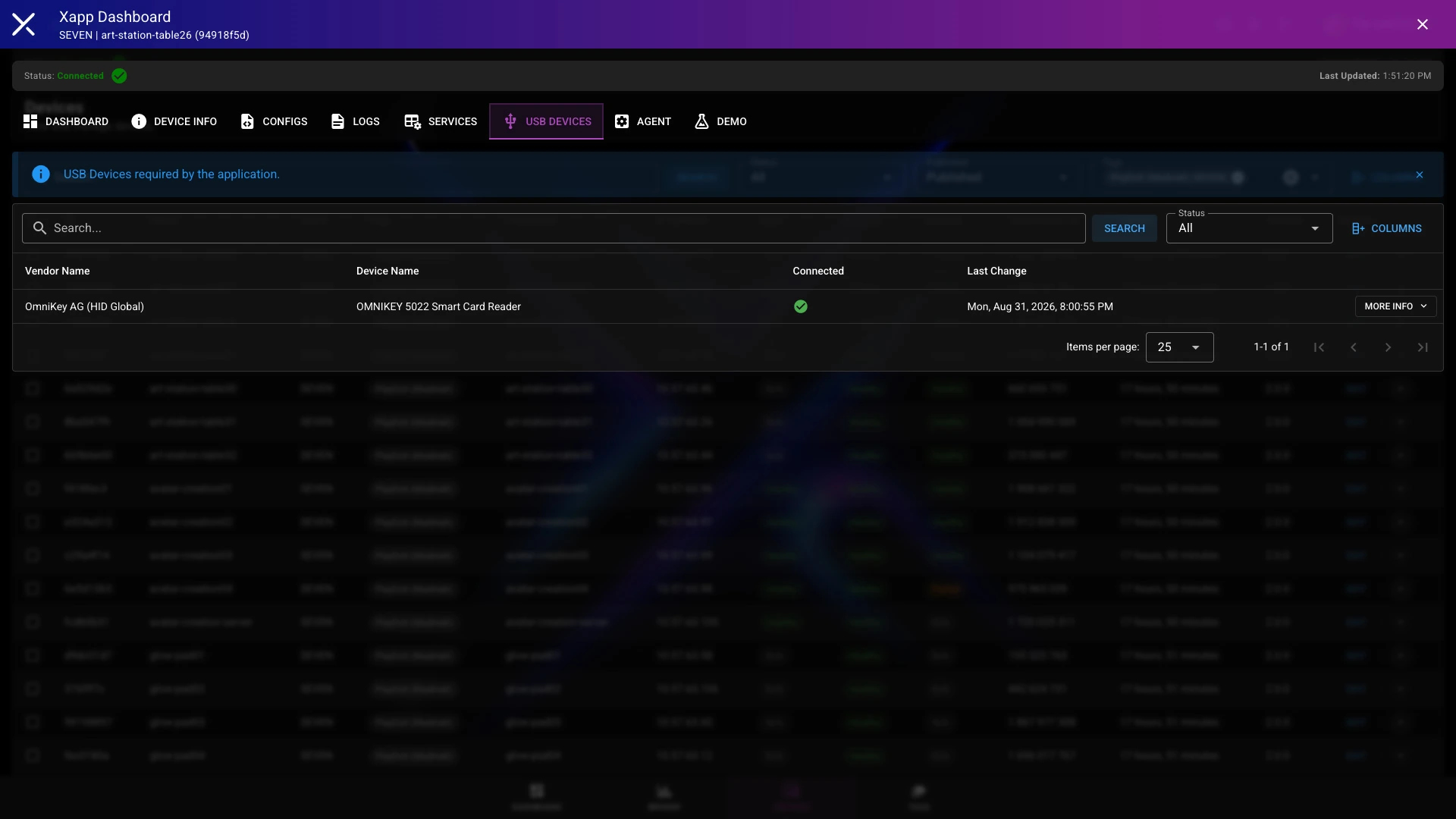
Card readers, sensors, printers, cameras — the instant a required device disconnects, it shows up on the dashboard instead of in a comment card.
Roll a software update out to one device or the entire fleet, and confirm every machine landed on it — no chasing down stragglers one by one.
How it works
You don't have to touch a single device to know what's happening with all of them. Here's how that works.
Each device — Raspberry Pi, Linux, Windows, macOS — runs a lightweight Xapp monitor that continuously reports its health, hardware, services, and peripherals.
Every device across every project rolls up into a single dashboard, searchable by client, group, tag, or status.
Restart, reboot, reconfigure, update, or open a session on any device — remotely, the moment something needs attention.
Where it runs
Xapp came out of keeping large-scale interactive work online long after launch day. It fits anywhere unattended machines — and the servers behind them — have to keep running.
Touch tables, projection, RFID and sensor-driven moments — the ones that can't afford to glitch mid-visit.
Exhibit and demo stations spread across a building, kept online without adding headcount.
Attractions, games, and photo experiences where a dark screen on a busy weekend is lost revenue.
Pop-ups and flagship displays where downtime is a lost impression.
Self-service and wayfinding kiosks that can't afford to go dark during a rush.
Fleets in transit or on-site for a run, far from the people who built them.
You know the instant a device goes offline — live updates over a persistent connection, with automatic reconnect the moment it's back.
One compromised device can't put anything else at risk — each one authenticates with its own private key, and those credentials can't reach the platform's API.
One dashboard, whatever's under the hood — the same monitor covers Raspberry Pi, Linux, Windows, and macOS, so there's nothing per-OS to learn.




































Get in touch
We'll show you Xapp live — how it monitors your devices, catches trouble early, and keeps things running without a site visit.
